
Your Garage Door Shouldn't Sound Like That
You press the button on your remote, and instead of a smooth, quiet operation, your garage door announces itself to the entire neighborhood. Maybe it's a grinding sound that makes you wince, a high-pitched squeal that sets your teeth on edge, or a rattling that shakes the walls. Whatever the noise, one thing is certain: your garage door is trying to tell you something.
For homeowners in Canyon Lake, where quiet residential streets and close-knit communities are part of daily life, a noisy garage door isn't just annoying — it can be a sign that something is wearing out or about to fail. The good news is that most garage door noises have identifiable causes, and many can be resolved before they turn into expensive repairs.
Common Garage Door Noises and What They Mean
Not all garage door sounds are created equal. The type of noise you're hearing can point directly to the source of the problem. Here's a breakdown of the most common sounds and what's likely going on behind them.
Grinding or Scraping
A grinding noise usually indicates metal-on-metal friction where it shouldn't exist. The most common culprits include:
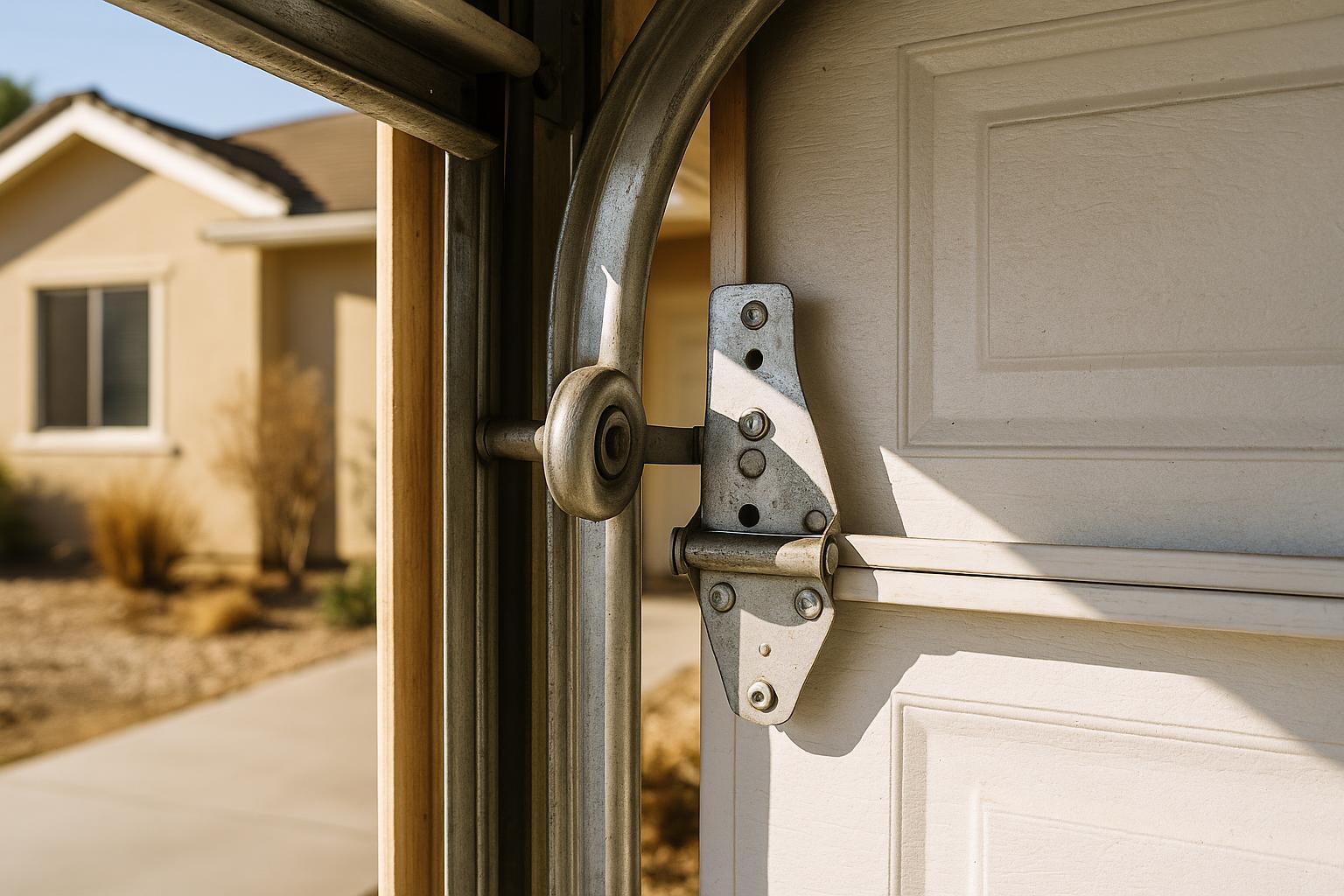
- Worn rollers: Steel rollers wear down over time and begin grinding against the track. Nylon rollers are a quieter, longer-lasting alternative that many Canyon Lake homeowners upgrade to.
- Misaligned tracks: If the tracks that guide your door have shifted even slightly, the door can scrape against them as it moves up and down.
- Dry or damaged hinges: Hinges that lack lubrication or have begun to deteriorate can produce a harsh grinding sound during operation.
Squealing or Screeching
High-pitched squealing is almost always a lubrication issue. Your garage door system has numerous moving parts — rollers, hinges, springs, and bearings — that require periodic lubrication to operate smoothly. When these parts dry out, they produce that unmistakable screech.
In the Inland Empire's warm, dry climate, lubrication can break down faster than in more humid regions. This means Canyon Lake homeowners may need to lubricate their garage door components more frequently than the standard recommendation.
Rattling or Vibrating
A rattling garage door often points to loose hardware. Over hundreds of cycles, nuts, bolts, and screws can gradually work themselves loose. The vibration of the door's movement amplifies the problem, turning a slightly loose bolt into a noticeable rattle.
Other causes of rattling include:
- Loose chain on a chain-drive opener
- Unsecured garage door panels
- A detached or loose support bracket
Popping or Banging
If you hear a loud pop or bang when your garage door starts moving, the torsion springs may be the issue. Springs that are under improper tension or beginning to wear can produce sudden popping sounds. This noise should be taken seriously — a spring under extreme tension can be dangerous if it fails.
Humming or Buzzing Without Movement
When your garage door opener hums or buzzes but the door doesn't move, the motor is trying to work but something is preventing it. This could be a stripped gear inside the opener, a broken spring that's made the door too heavy for the motor, or an obstruction in the tracks.
Quick Fixes You Can Try at Home
Before calling a professional, there are a few safe steps you can take to address minor noise issues:
- Tighten visible hardware: Using a socket wrench, carefully tighten any nuts and bolts on the door's brackets, hinges, and track mounts. Be careful not to overtighten.
- Lubricate moving parts: Apply a garage door-specific lubricant or white lithium grease to the rollers, hinges, springs, and bearing plates. Avoid using WD-40 as a long-term lubricant — it's a solvent that can actually strip away existing grease.
- Inspect the rollers: Look at each roller as the door moves. If any are visibly cracked, chipped, or worn flat, they need to be replaced.
- Check the chain or belt tension: If you have a chain-drive opener, a sagging chain can slap against the rail and create noise. Consult your opener's manual for proper tension adjustment.
When to Call a Professional
While basic maintenance is something any homeowner can handle, certain garage door issues require professional expertise and specialized tools. You should call a garage door technician if:
- The noise involves the springs or cables — these components are under extreme tension and can cause serious injury if handled improperly.
- The tracks are visibly bent or misaligned and need to be repositioned.
- The opener motor is making noise but failing to move the door.
- You've lubricated and tightened everything, but the noise persists or worsens.
- The door is visibly uneven or appears to be sagging on one side.
Ignoring persistent noises doesn't just mean living with an annoyance. A small problem left unaddressed can cascade into a much larger and more costly repair. A worn roller that goes unreplaced can damage the track. A dry hinge can seize up and put stress on the panels. A spring making unusual sounds can snap without warning.
Preventive Maintenance Keeps Things Quiet
The best way to avoid a noisy garage door is to stay ahead of problems with regular preventive maintenance. A professional maintenance visit typically includes:
- Full inspection of springs, cables, rollers, and tracks
- Lubrication of all moving components
- Tightening of all hardware
- Balance testing to ensure proper spring tension
- Safety sensor alignment check
- Opener performance evaluation
Most garage door professionals recommend scheduling maintenance once or twice a year. For homes in Canyon Lake and the surrounding areas like Lake Elsinore, Menifee, and Wildomar, an annual tune-up before summer is especially smart — the heat puts extra stress on metal components and can accelerate wear.
Don't Ignore What Your Garage Door Is Telling You
Your garage door is the largest moving component in your home, and it works hard — the average household opens and closes it over a thousand times per year. When it starts making unusual noises, it's giving you an early warning that something needs attention.
Whether it's a simple lubrication issue or a sign that a major component is nearing the end of its life, addressing garage door noises promptly saves you money, prevents inconvenient breakdowns, and keeps your family safe. If your garage door has been getting louder and you're not sure what's causing it, Canyon Lake Garage Door is here to help. We'll diagnose the problem, explain your options, and get your door running smoothly and quietly again.