
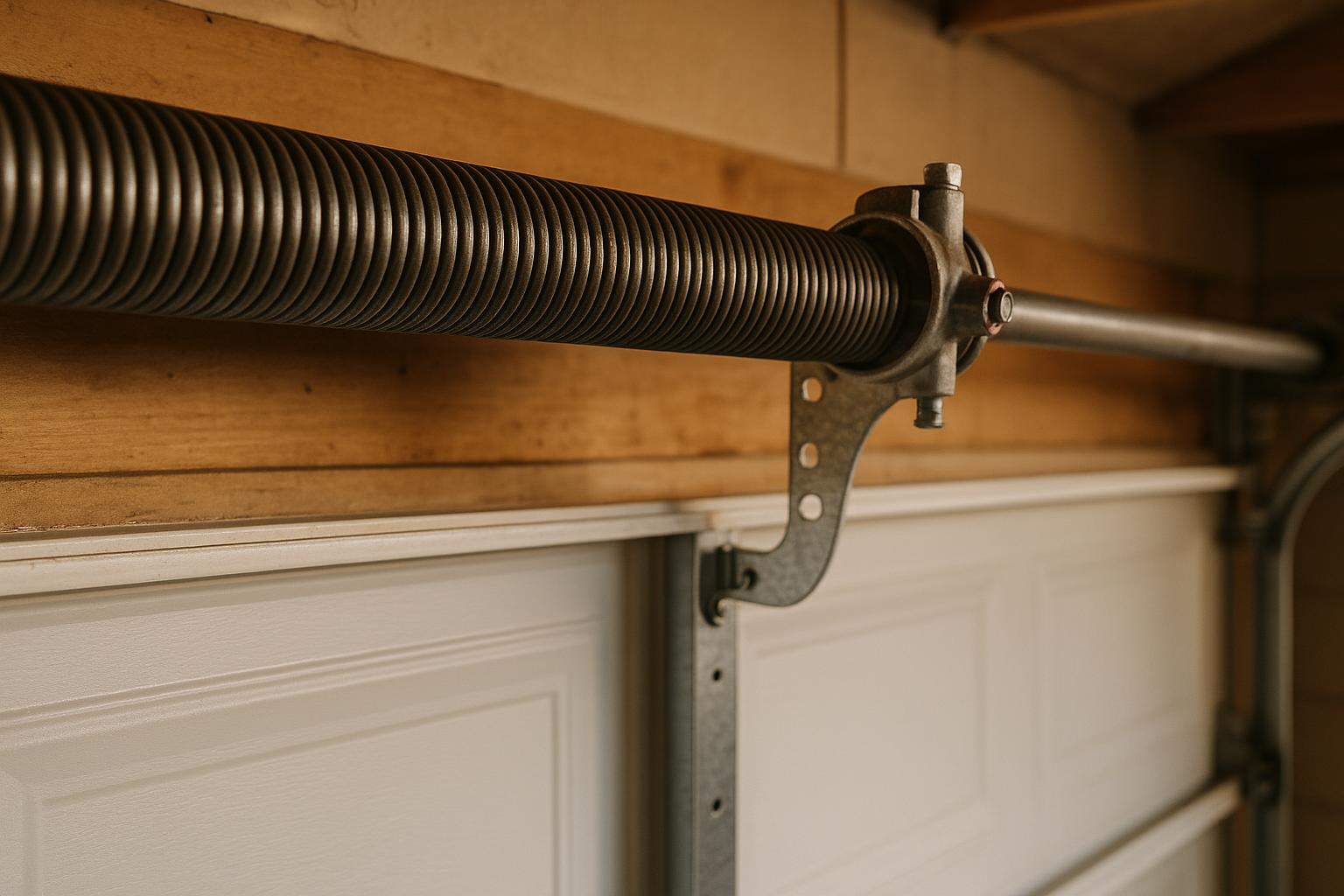
Your Garage Door Springs Are Doing More Work Than You Think
Every time you open or close your garage door, the springs do the heavy lifting — literally. A standard two-car garage door can weigh anywhere from 150 to 300 pounds, and it's the torsion or extension springs that bear that load dozens of times a week. For homeowners in Canyon Lake who use their garage as a primary entry point, that adds up to thousands of cycles per year.
Despite how critical they are, most people never think about their garage door springs until something goes wrong. And when a spring fails, it's not subtle — you'll hear a loud bang, and your door will either refuse to open or come crashing down. Understanding the lifespan of your springs and knowing when to replace them can save you from an inconvenient, expensive, and potentially dangerous situation.
How Long Do Garage Door Springs Last?
The lifespan of a garage door spring is measured in cycles. One cycle equals one full open-and-close of the door. Here's what you can generally expect:
- Standard-rated springs: approximately 10,000 cycles
- High-cycle springs: 25,000 to 50,000 cycles or more
If your household opens and closes the garage door four times a day, that's roughly 1,460 cycles per year. A standard spring would last about seven years under those conditions. A high-cycle spring could last 15 to 20 years or longer.
However, these are estimates under ideal conditions. Several factors can shorten spring life, and Canyon Lake's climate plays a role that many homeowners don't consider.
How Canyon Lake's Climate Affects Your Springs
The Inland Empire is known for hot, dry summers and mild winters, but the temperature swings between day and night — especially during spring and fall — can take a toll on metal components. Metal expands in heat and contracts in cold. These repeated micro-expansions and contractions accelerate metal fatigue in your garage door springs over time.
Additionally, Canyon Lake homeowners who live near the lake itself may experience slightly higher humidity levels compared to surrounding areas like Menifee or Wildomar. While this isn't coastal-level moisture, any added humidity can contribute to minor surface corrosion on uncoated springs, gradually weakening them.
Regular lubrication and preventive maintenance can counteract these effects significantly, but they won't make springs last forever.
Warning Signs Your Springs Are Wearing Out
You don't have to wait for a spring to snap to know it's time for a replacement. Watch for these telltale signs:
1. The Door Feels Heavier Than Usual
Try disconnecting the opener and lifting the door manually. If it feels noticeably heavy or difficult to raise, the springs are losing tension and no longer counterbalancing the door's weight properly.
2. The Door Opens Unevenly
If one side of the door rises faster than the other, one spring may be weaker or close to failure. This is especially common in doors with two extension springs — one on each side.
3. Visible Gaps in the Spring Coils
A healthy torsion spring has tightly wound coils with uniform spacing. If you notice a visible gap or separation between coils, the spring has stretched and is nearing the end of its life.
4. The Door Slams Shut Quickly
Springs control the speed at which your door closes. If the door drops faster than normal or slams the last few inches, the springs aren't providing adequate resistance anymore.
5. Rust or Corrosion on the Springs
Surface rust increases friction within the coils and weakens the metal. If your springs look corroded, they're aging faster than they should be.
6. Loud Creaking or Squealing
While some noise is normal, excessive creaking, popping, or squealing when the door operates can indicate that springs are under stress and losing their integrity.
Can You Replace Garage Door Springs Yourself?
This is one of the most common questions we get from Canyon Lake homeowners, and the answer is a firm no — at least not safely. Garage door springs are under extreme tension. A torsion spring that snaps or is improperly handled during replacement can cause severe injuries or even death.
Professional technicians use specialized tools, including winding bars and clamps, to safely release and apply spring tension. They also know how to match the correct spring size, wire gauge, and length to your specific door weight and size. An improperly sized spring won't just perform poorly — it can damage your opener, warp your tracks, and create a safety hazard.
Should You Replace One Spring or Both?
If one spring breaks and the other is still intact, it might seem logical to replace only the broken one. However, we strongly recommend replacing both springs at the same time. Here's why:
- Balanced wear: If one spring failed, the other has the same amount of wear and is likely close to failing too.
- Even performance: Mismatched springs — one new and one old — create uneven tension that can cause the door to open crookedly and put stress on the tracks and opener.
- Cost efficiency: The labor cost is the same whether you replace one or two springs. Replacing both now saves you from paying for a second service call in a few months.
How Preventive Maintenance Extends Spring Life
One of the best investments you can make for your garage door system is regular preventive maintenance. A professional tune-up typically includes:
- Lubricating the springs with a silicone-based or lithium-based spray to reduce friction and prevent rust
- Inspecting spring tension and making adjustments to ensure proper balance
- Checking cables, rollers, and tracks for wear that could put extra strain on the springs
- Testing the door balance by disconnecting the opener and checking if the door stays in place when opened halfway
- Tightening hardware that may have loosened from daily vibration
We recommend scheduling maintenance at least once a year. Homeowners in Canyon Lake, Lake Elsinore, and Temecula who use their garage doors frequently — four or more times daily — may benefit from twice-yearly service.
When to Upgrade to High-Cycle Springs
If you're replacing springs on a home you plan to stay in for many years, consider upgrading to high-cycle springs. The upfront cost is modestly higher, but the extended lifespan — often double or triple that of standard springs — makes them a smart long-term investment. They're especially worthwhile for families with multiple drivers who come and go throughout the day.
Don't Wait for a Spring to Break
A broken garage door spring is more than an inconvenience. It can leave your car trapped inside, compromise your home's security, and pose a real safety risk to your family. If your garage door springs are more than seven years old, showing signs of wear, or if you can't remember the last time they were inspected, it's time to call a professional.
At Canyon Lake Garage Door, we provide fast, honest spring replacement and preventive maintenance services throughout Canyon Lake, Murrieta, Menifee, Wildomar, Lake Elsinore, and Temecula. We'll assess your springs, recommend the right replacement, and get your door operating safely — usually in a single visit. Give us a call today to schedule an inspection before a small issue becomes an emergency.