
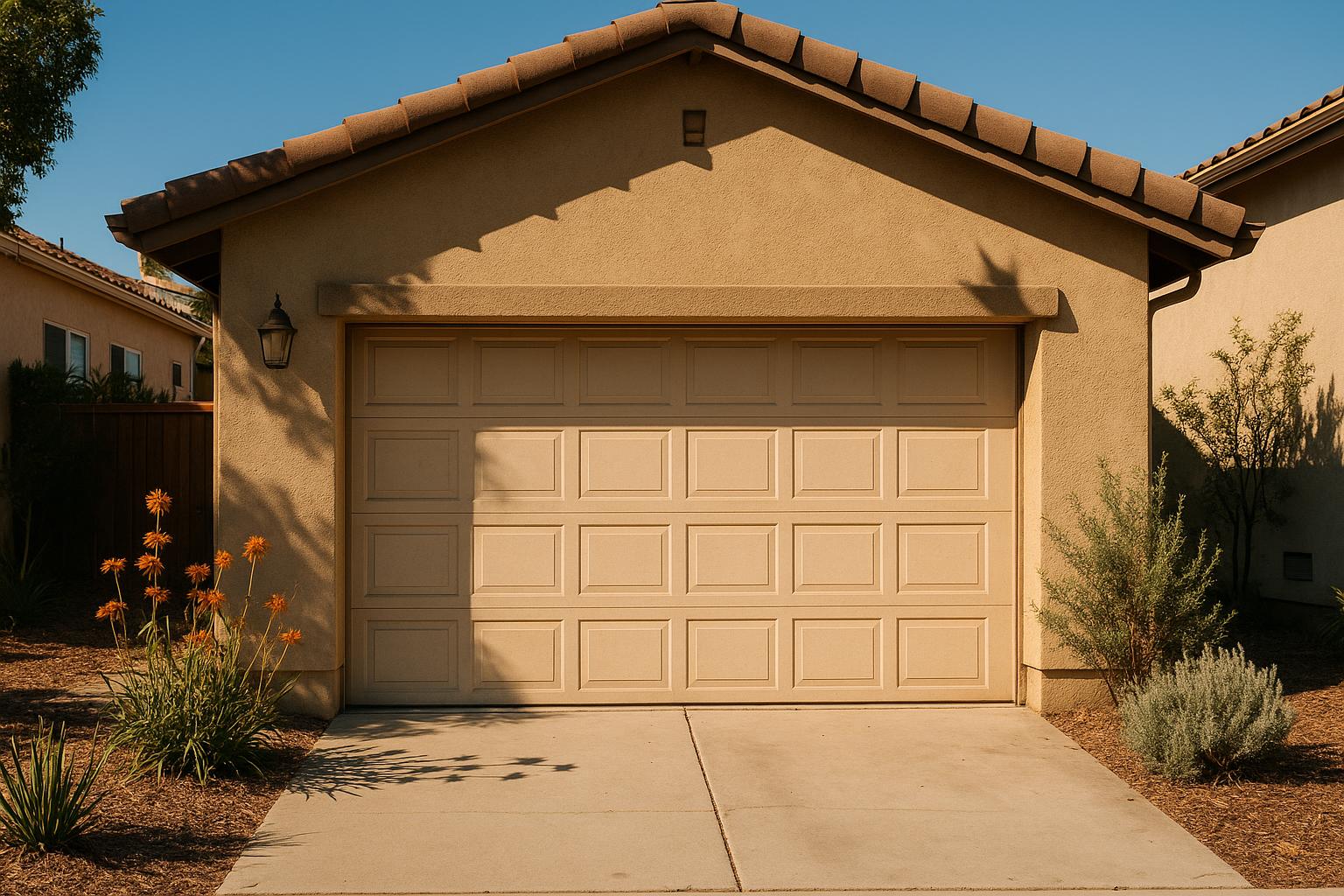
Your Garage Door Takes a Beating From the Inland Empire Sun
Living in Canyon Lake means enjoying warm weather, beautiful lake views, and over 270 days of sunshine a year. But all that sun and heat comes at a cost — especially for your garage door. As the largest moving part of your home, your garage door is constantly exposed to UV rays, triple-digit summer temperatures, and the dramatic temperature swings that come with desert-adjacent living.
Most homeowners don't think about how weather affects their garage door until something goes wrong. But understanding the impact of heat and sun damage can help you stay ahead of costly repairs and keep your garage door functioning safely for years to come.
How Extreme Heat Affects Garage Door Components
When summer temperatures in Canyon Lake climb past 100°F, the heat doesn't just make your driveway uncomfortable to walk on — it puts real stress on your garage door system. Here's how:
Warping and Expansion of Panels
Garage door panels, whether they're made of steel, aluminum, or wood, expand when they heat up. Over time, repeated expansion and contraction cycles can cause panels to warp, bow, or develop gaps. Wooden doors are especially vulnerable, as heat draws out moisture and causes cracking and splitting. Even steel doors with foam insulation cores can develop subtle warping that affects how smoothly the door opens and closes.
Weatherstripping and Seal Deterioration
The rubber seals along the bottom and sides of your garage door are designed to keep out dust, pests, and hot air. But prolonged UV exposure causes these seals to dry out, crack, and become brittle. Once your weatherstripping fails, you'll notice more dust inside your garage, higher energy bills if the space is climate-controlled, and even small critters finding their way in.
Spring and Hardware Fatigue
Garage door springs, cables, and metal hardware are all affected by heat. Metal expands in high temperatures, which can change the tension on your springs and throw off the door's balance. While a single hot day won't ruin your springs, years of extreme temperature cycling accelerate wear and can shorten the lifespan of these critical components.
Opener and Electronic Malfunctions
Your garage door opener sits in one of the hottest parts of your home — the garage ceiling. In Canyon Lake summers, garage temperatures can easily reach 120°F or higher. This kind of heat can cause the opener's motor to overheat and shut down, circuit boards to malfunction, and battery backups to degrade faster. If your opener seems sluggish or unresponsive on the hottest days, heat is likely the culprit.
Signs of Sun and Heat Damage to Watch For
Catching heat-related damage early can save you from expensive emergency repairs. Here are the warning signs Canyon Lake homeowners should look for:
- Faded or peeling paint: UV rays break down paint and finish over time, leaving your door looking worn and reducing its protective coating.
- Visible cracks or splits in panels: Especially common on wooden doors, but even composite materials can crack under prolonged sun exposure.
- Gaps along the bottom or sides: If you can see daylight under your closed garage door, your weatherstripping has likely deteriorated.
- The door sticks or binds: Warped panels or expanded tracks can cause the door to catch or move unevenly.
- The opener struggles or stops mid-cycle: An overheating motor will often pause, reverse, or refuse to complete a full open or close cycle.
- Increased energy bills: A compromised garage door lets hot air pour into your garage, which can raise cooling costs for your entire home if the garage shares a wall with living spaces.
How to Protect Your Garage Door From Heat Damage
The good news is that a little preventive care goes a long way. Here are practical steps you can take to protect your garage door from the Canyon Lake heat:
Choose the Right Door Material
If you're installing a new garage door or replacing an aging one, consider insulated steel doors. They handle heat better than wood, resist warping, and help regulate the temperature inside your garage. Many modern insulated doors also come with UV-resistant finishes that hold up well in our climate.
Keep Up With Paint and Finish
A fresh coat of exterior-grade paint or stain does more than improve curb appeal — it acts as a shield against UV damage. Light colors reflect more heat than dark ones, which can help reduce panel temperatures and slow down material degradation. Plan on repainting or refinishing your garage door every three to five years in our climate.
Replace Weatherstripping Before It Fails
Don't wait until your bottom seal is crumbling to replace it. Inspect your weatherstripping at least once a year — ideally in the spring before the hottest months arrive. Replacing worn seals is a quick, affordable fix that pays for itself in energy savings and pest prevention.
Lubricate Moving Parts Regularly
Heat dries out lubricant faster than moderate climates. Apply a silicone-based garage door lubricant to your springs, hinges, rollers, and tracks at least twice a year. This reduces friction, prevents premature wear, and keeps everything moving smoothly even when temperatures spike.
Ventilate Your Garage
Reducing the overall temperature inside your garage protects your opener and other components from heat stress. Consider adding a garage fan, passive vents, or even reflective insulation on the ceiling to bring temperatures down.
Schedule Annual Maintenance
A professional maintenance visit is the most effective way to catch heat-related wear before it becomes a safety hazard. A trained technician can test spring tension, inspect hardware, check opener performance, and identify early signs of panel damage that aren't always obvious to homeowners.
When to Call a Professional
Some heat-related issues are easy to handle on your own, like replacing a worn seal or applying lubricant. But others require professional attention. You should call a garage door technician if:
- Your door is visibly warped or won't sit flush when closed
- Springs appear stretched, rusty, or are making unusual noises
- Your opener frequently overheats or stops working during hot days
- Panels are cracked, split, or structurally compromised
- The door feels heavier than normal or is difficult to lift manually
These issues can worsen quickly in extreme heat and may pose safety risks if left unaddressed.
Keep Your Garage Door Ready for Canyon Lake Summers
Your garage door works hard every day, and in a climate like ours, it's fighting the elements every time the sun comes up. Taking a proactive approach to maintenance and being aware of how heat and UV exposure affect your door will help you avoid unexpected breakdowns and extend the life of your investment.
If it's been a while since your garage door had a checkup, or if you've noticed any of the warning signs above, Canyon Lake Garage Door is here to help. We provide honest assessments, quality repairs, and expert installation services throughout Canyon Lake, Lake Elsinore, Menifee, Wildomar, Murrieta, and Temecula. Give us a call and let's make sure your garage door is ready to handle whatever summer throws at it.